Quick answer
An air conditioner leaking water inside usually has a blocked or disconnected condensate drain, a dirty filter or coil that's freezing then thawing, or an indoor unit that isn't level. If it's also not cooling, low refrigerant or a failing part may be the cause. Clean the filters, then call a licensed technician.
An air conditioner leaking water down the wall is one of the most common split system problems, and it often turns up alongside another one: the aircon is running but not cooling properly. The two are frequently linked. A clogged filter or iced-up coil can cause both at once, and so can low refrigerant.
This guide explains what causes air-con leaks and poor cooling, the simple checks any homeowner can do, and when you need a licensed technician. In Adelaide, where systems run hard through summer heatwaves, these problems tend to show up on the hottest days of the year, so it pays to catch them early.
Why is my air conditioner leaking water?
Split systems pull moisture out of the air as they cool. That water collects in a tray inside the indoor unit and runs away through a condensate drain line, usually to the outside or into a drain. When anything interrupts that path, water ends up on your wall or floor.
| Cause | Clues | What happens next |
|---|---|---|
| Blocked condensate drain | Steady drip from the indoor unit, often after a period of heavy use | Technician clears and flushes the line |
| Dirty filters | Reduced airflow, dust on the filter, coil may freeze | Clean filters; technician if it persists |
| Frozen coil thawing | Ice on the pipes or coil, then a gush of water | Switch off, clean filters, call a technician |
| Indoor unit not level | Water dribbles from one end | Technician re-levels the unit |
| Cracked or rusted drain tray | Ongoing leak despite a clear drain | Technician replaces the tray |
| Disconnected or kinked drain hose | Leak started after other work or movement | Technician reconnects or replaces the hose |
| Low refrigerant | Ice on pipes, poor cooling and leaking | Technician finds and repairs the leak |
Why is my aircon not cooling?
If the system is running but the room isn’t getting cooler, work through the simple causes first, then the technical ones.
Simple causes you can check:
- the mode is set to “cool”, not “fan”, “dry” or “auto” with a high setpoint
- the set temperature is lower than the room temperature
- the filters are clean
- the outdoor unit isn’t blocked by plants, covers or rubbish
- doors and windows are closed
Technical causes a technician will look for:
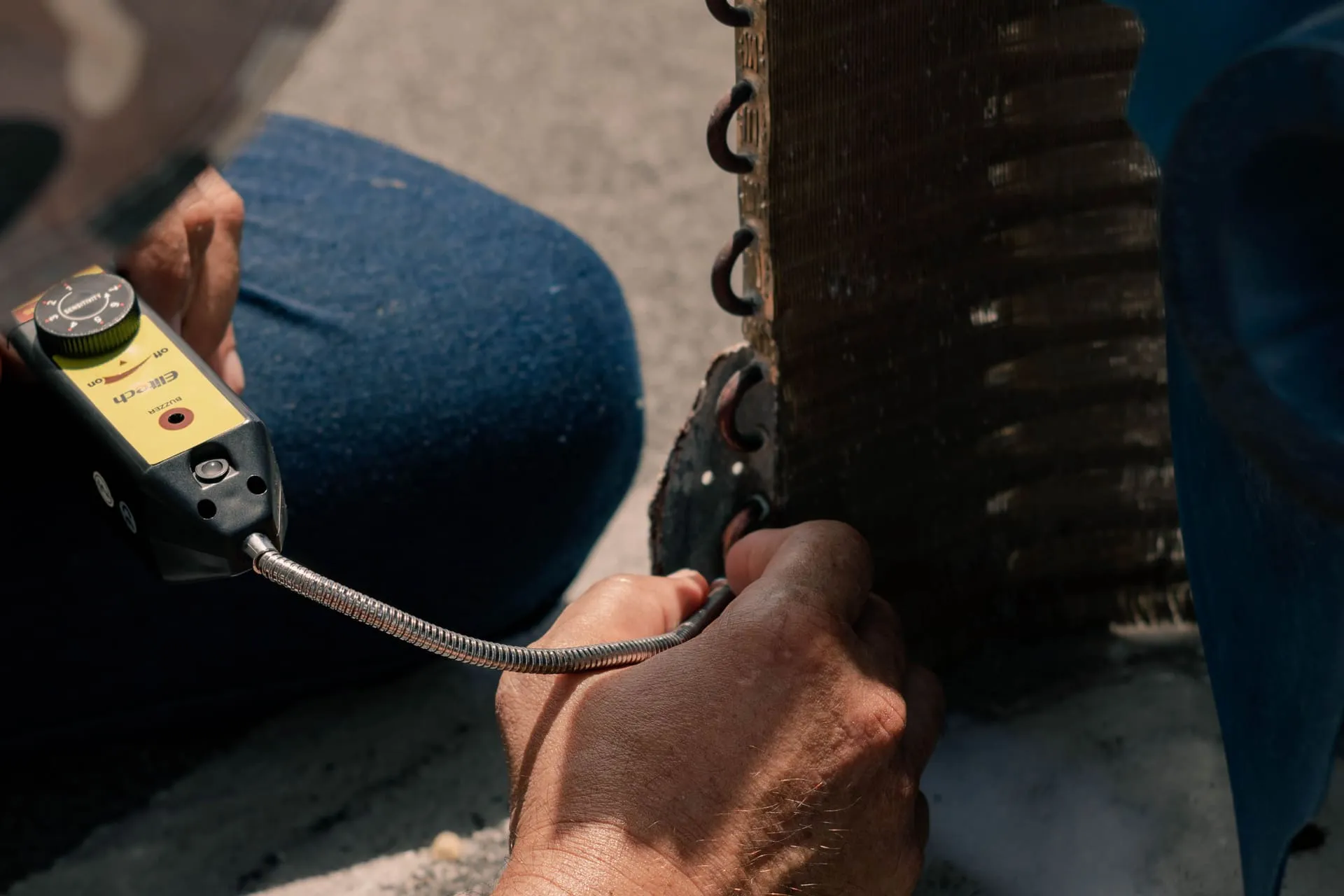
- Refrigerant leak. Low refrigerant means less cooling capacity and can cause the coil to ice up.
- Dirty coils. Dust on the indoor coil or grime on the outdoor coil stops heat transferring properly.
- Failing fan or compressor. Motors and capacitors wear over time, especially in hot outdoor conditions.
- Electrical or sensor faults. Faulty sensors or control boards can stop the system working properly.
- Wrong size for the room. If the system has never cooled well on hot days, it may simply be too small.
If you suspect sizing is the problem, our guide on what size air conditioner you need explains how capacity is worked out.
What can I safely check myself?
You can do a few things safely without opening the unit.
- Switch the system off at the remote if it’s leaking.
- Put a towel or container under the drip to protect walls and floors.
- Remove and clean the indoor filters following the manufacturer’s instructions.
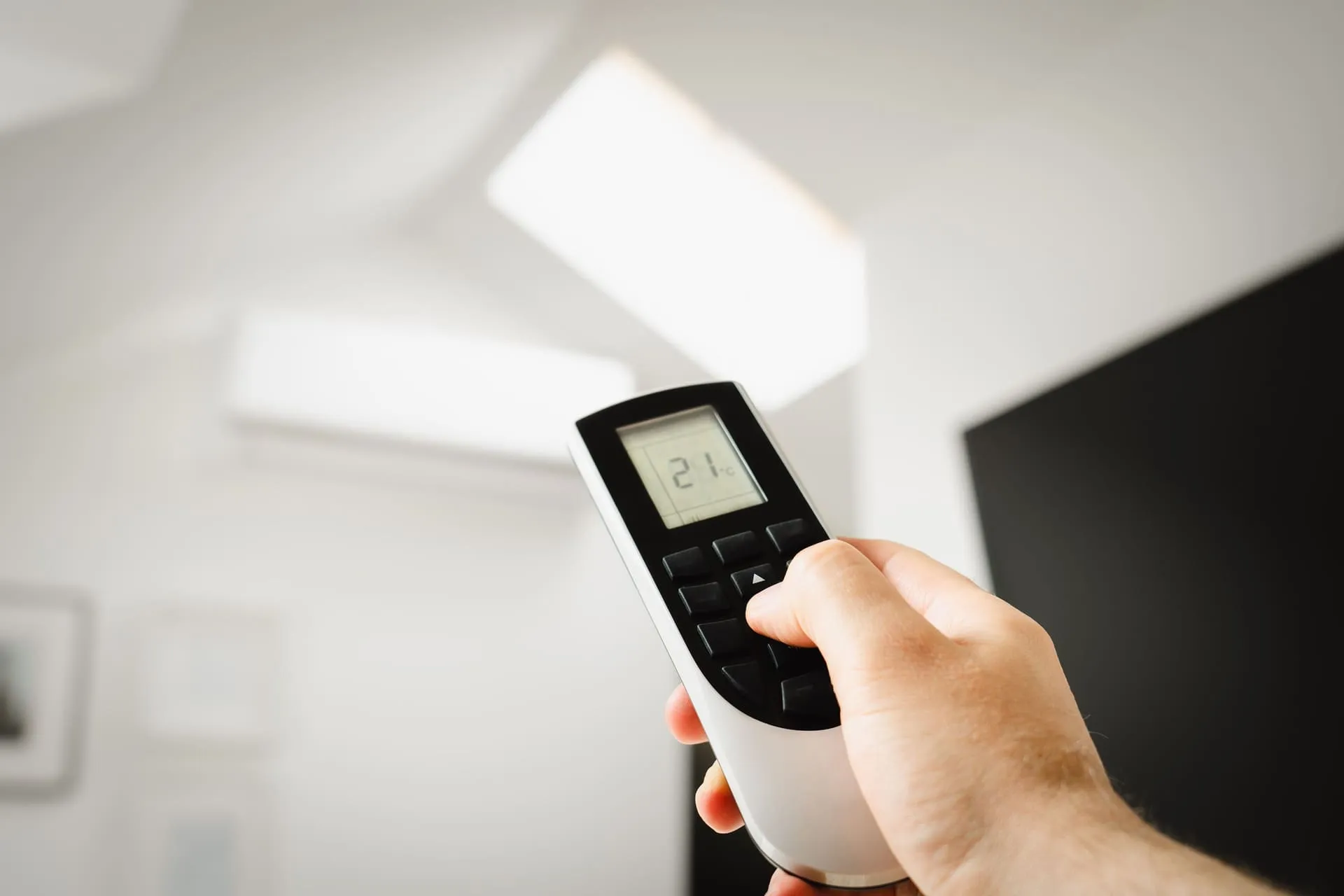
- Check the settings: mode, temperature and fan speed.
- Look at the outdoor unit and clear away leaves, plants or anything blocking airflow.
- Note any error codes on the indoor unit display.
- Check whether the drain hose outside is dripping while the system cools.
Energy.gov.au suggests keeping indoor units dust-free by wiping down vents, filters and louvres. Regular filter cleaning is the simplest way to prevent both leaks and poor cooling.
Don’t remove covers, touch the electrical connections or try to top up refrigerant. If you see ice on the pipes, switch the system off and let it thaw before calling a technician.
Is water from the outdoor unit normal?
Often, yes. Reverse-cycle systems can produce water at the outdoor unit when heating, particularly when they run a defrost cycle on cold mornings. That’s common in the Adelaide Hills during winter.
Water from the indoor unit is a different story. That should always be checked.
Does my air conditioner need regassing?
Only if it has lost refrigerant, and if it has, there’s a leak. Air-conditioning systems are sealed, so refrigerant shouldn’t run out with normal use. Simply regassing without finding the leak means the refrigerant escapes again.
Refrigerant work must be done by a licensed technician. The Australian Refrigeration Council says a refrigerant handling licence must be held by anyone who carries out work on refrigeration and air-conditioning equipment that carries a risk of refrigerant being released, including installing, commissioning, servicing or maintaining it. Energy.gov.au also notes that you can check an installer’s ARC licence through its online licence check portal.
Why does my aircon struggle on the hottest days?
Even a healthy system can find extreme heat hard going. On a 40 °C+ Adelaide afternoon, the outdoor unit has to reject heat into air that’s already very hot, so capacity naturally drops. If the system was only just big enough for the room, it may not keep up.
A few things help on heatwave days:
- start cooling early in the morning rather than waiting until the house is hot
- close blinds and curtains on sun-facing windows
- keep the outdoor unit clear and, where possible, shaded from afternoon sun without blocking airflow
- set a sensible temperature rather than the lowest setting, which doesn’t cool any faster
If the system struggles even on moderately warm days, there’s likely a fault or a sizing problem worth investigating.
How can I prevent leaks and poor cooling?
Regular care stops many problems before they start. Clean the filters regularly in the cooling season, keep the outdoor unit clear of plants and debris, and book a professional service as the manufacturer recommends.
Energy.gov.au suggests asking a licensed technician how often your system should be serviced and pre-booking the next appointment. A service typically includes cleaning the coils, flushing the condensate drain, checking electrical connections and confirming the system is running as it should. Booking before summer avoids the rush when the first heatwave arrives.
Repair or replace?
A technician will usually recommend repair when the fault is a blocked drain, a dirty coil, a sensor or a single worn part. Replacement may make more sense when:
- the system is old and needs a major part such as a compressor
- it uses an older refrigerant that’s harder to service
- it’s always been undersized for the room
- repairs are becoming frequent
Ask the technician to explain the options in the quote. If you replace, check the manufacturer’s warranty terms on the new system. Our split system installation cost guide explains the cost drivers.
When should you call a licensed technician?
Call a licensed air-conditioning technician if:
- water keeps leaking after you’ve cleaned the filters
- you see ice on the pipes or indoor coil
- the system runs but doesn’t cool, even with correct settings
- there’s a burning smell, buzzing or tripping power
- the outdoor unit makes grinding or banging noises
- an error code keeps coming back
If the system trips the power or smells like burning, switch it off at the isolator or the circuit breaker and leave it off until it’s checked. See our air conditioning repairs page for more, or our air conditioning servicing page to stay ahead of problems before summer. The Adelaide air conditioning hub covers installation and repairs across the city.
Getting it sorted
If your air conditioner is leaking water or not cooling, send one enquiry through our contact form or call 08 6800 6079. We pass your enquiry to one local air-con technician, who calls back within 24–48 hours to diagnose the problem and quote before any work starts.
Sources
Stock photo, for illustration only. This guide is general information for Adelaide homeowners, not professional advice. In South Australia, electrical, plumbing and gas work must be carried out by an appropriately licensed tradesperson, and rules change, so check current requirements with the relevant authority.