Quick answer
Ceiling fan installation cost depends mainly on whether there's existing wiring at the ceiling point, how easy the roof space is to reach, the type of fan and controls you choose, and how many fans go in at once. A licensed electrician should quote the full job, including the certificate of compliance, before work starts.
Ceiling fan installation cost in Adelaide isn’t one fixed number, and anyone who quotes a price without knowing your ceiling is guessing. The final figure depends on what’s already in the ceiling, how easy the roof space is to get into, the fan and controls you pick, and how many fans you want installed in one visit.
This guide explains the cost drivers, what a typical quote should include, how to read it, and the questions worth asking before you say yes. It doesn’t list prices, because they change with every house and every job. A local electrician will quote yours before any work starts.
What affects ceiling fan installation cost?
The biggest driver is wiring. Replacing an existing light or fan at a point that’s already wired is a much smaller job than running a new circuit to a room that has never had one.
| Cost driver | Why it matters |
|---|---|
| Existing light or fan point | Reusing a wired ceiling point usually means less cabling and less roof time |
| New cabling or circuit | Running cable from the switchboard or another circuit adds labour and materials |
| Roof access | Low-pitched roofs, tight spaces, two-storey homes and flat ceilings make the job slower |
| Ceiling type and height | Raked or high ceilings may need extension rods, ladders or scaffolding |
| Ceiling support | Some fans need extra bracing or a mounting block fixed to the ceiling joist |
| Fan type | AC or DC motor, light kit or no light, size and weight |
| Controls | Wall controller, remote, smart-home integration or a simple pull cord |
| Number of fans | Several fans in one visit often work out better per fan than separate trips |
| Removing the old fitting | Disposal of an old fan or light and patching holes |
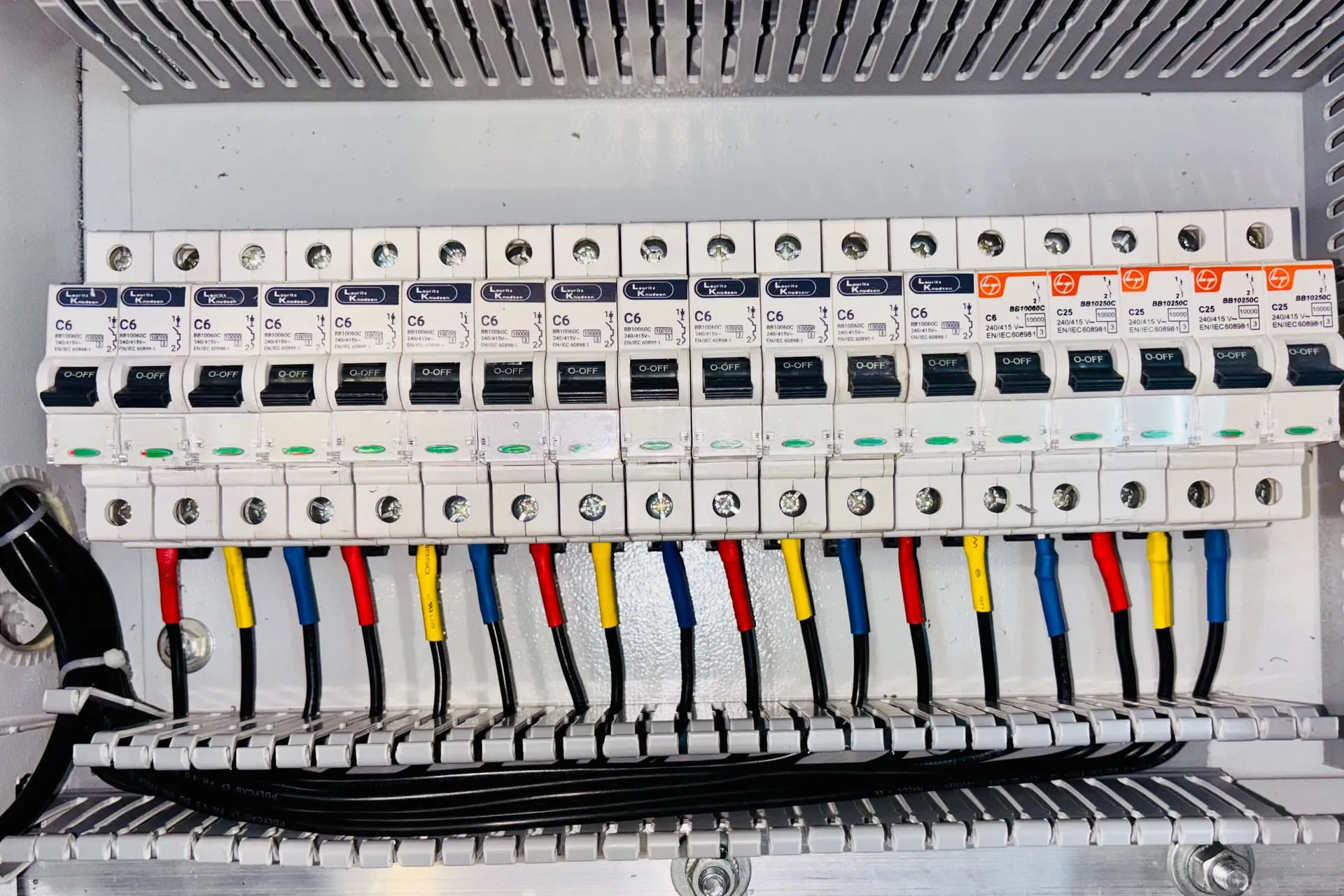
| Switchboard condition | An older board may need attention before new circuits are added |
Adelaide homes vary a lot. A 1960s brick-veneer house with a gable roof is often easy to work in. A low-pitched 1990s roof with heavy insulation, or a rendered two-storey home, can be slow going. That alone can change the quote noticeably.
What’s usually included in a quote?
A clear quote should spell out exactly what you’re paying for. Typical inclusions are:
- supplying the fan (if the electrician is providing it) or fitting a fan you’ve bought
- assembly and mounting, including any bracing needed at the ceiling
- connection to existing wiring, or new cabling from the switchboard or a nearby circuit
- the wall control, switch or remote setup
- testing the fan and the circuit once it’s connected
- removal of the old light or fan
- the electronic certificate of compliance
In South Australia, electricians must give you an electronic certificate of compliance (eCoC) for most of their work, within 30 days of completion. It confirms the electrician is licensed and that the work has been tested and meets Australian Standards. Our guide to the certificate of compliance in SA explains what to look for.
Supply-and-install or install only?
You can usually go either way. Buying the fan yourself gives you full choice, while having the electrician supply it means they’re responsible for getting a suitable model.
If you buy your own, check a few things before the electrician arrives:
- the fan is the right size for the room
- it suits the ceiling height and angle (raked ceilings may need an angle adaptor)
- it’s rated for outdoor or damp areas if it’s going on a verandah or alfresco
- the box contains all the parts, including the mounting bracket and controller
Fans bought online occasionally arrive missing parts or unsuitable for Australian wiring. If that happens on the day, you may pay for a return visit. Check the manufacturer’s warranty conditions too, as some require installation by a licensed electrician.
How do I read a ceiling fan quote?
Read it line by line and check it matches the job you described. A good quote shows:
- The scope. Which rooms, how many fans, and whether new cabling is included.
- What’s supplied. Brand and model of fan and controller, or a note that you’re supplying them.
- Assumptions. For example, “assumes existing wired point is suitable” or “assumes clear roof access”.
- Exclusions. Plastering, painting, removal of asbestos-containing material, or switchboard work.
- Variations. How extra work will be priced if something unexpected turns up in the roof.
- Paperwork. That an eCoC will be issued.
If the quote is a single line with a total and nothing else, ask for detail. You need to know what happens if the ceiling needs bracing or the existing wiring isn’t suitable.
What should I ask the electrician?
Asking the right questions up front avoids surprises later. Useful questions include:
- Can you use the existing light point, or does this need a new circuit?
- Is my ceiling strong enough as it is, or does it need extra support?
- What size fan suits this room and ceiling height?
- Will the controller need extra wiring?
- Is removal of the old fitting included?
- What happens if you find old or damaged wiring in the roof?
- Will I receive a certificate of compliance?
You can also check the electrician’s licence on the Consumer and Business Services register. CBS lets you search by name or licence number to confirm a person or business is licensed for the work.
Is it worth installing fans in several rooms at once?
Often, yes. Much of the cost of any electrical job is getting to site, setting up and getting into the roof. Doing bedrooms, the living area and an outdoor area in one visit spreads that time across several fans.
It’s also a good time to plan related work. If you’re thinking about new LED downlights, outdoor lighting or extra power points, the electrician can look at it all together. Our lighting installation page covers the lighting side.
Fans are a popular, low-energy way to stay comfortable through Adelaide’s hot summers, either on their own or alongside a split system. If you’re weighing up cooling options, our guide to what size air conditioner you need is worth a read.
AC or DC ceiling fan: does it change the cost?
The motor type mostly affects the price of the fan and how much it costs to run, rather than the installation itself. Both connect to the same household supply.
- AC fans use a traditional motor. They’re usually cheaper to buy, often come with a simple wall control, and are easy to replace like-for-like.
- DC fans use a more efficient motor. They tend to cost more upfront, run more quietly, use less power and usually offer more speed settings. Many come with a remote, and some include a wall controller that needs specific wiring.
If you’re replacing an AC fan with a DC model, ask the electrician whether the existing wall control can stay or needs to be swapped. That small detail can affect the quote.
Outdoor fans are another consideration. A fan for a verandah or alfresco needs to be rated for outdoor or damp locations, and the electrician will check the wiring and fittings suit an exposed position. Coastal homes from Glenelg to Henley Beach also face salt air, which is hard on metal parts, so it’s worth asking about corrosion-resistant models.
When should you call a licensed electrician?
Always, for the installation itself. Wiring a ceiling fan is electrical work, and in South Australia that must be done by a licensed electrical worker. DIY fan wiring is unsafe and illegal, and a poorly mounted fan is a falling hazard.
Call an electrician sooner rather than later if an existing fan:
- wobbles badly even after the blades are balanced
- makes grinding or clicking noises
- runs hot, smells like burning or trips the power
- has a controller that works only some of the time
For more about the service, see our ceiling fan installation page or the wider Adelaide electrician hub.
Getting it sorted
To get a quote for ceiling fan installation, send one enquiry through our contact form or call 08 6800 6079. We pass your enquiry to one local electrician, who calls you back within 24–48 hours to talk about the rooms, the fans and access, then quotes before any work starts.
Sources
Stock photo, for illustration only. This guide is general information for Adelaide homeowners, not professional advice. In South Australia, electrical, plumbing and gas work must be carried out by an appropriately licensed tradesperson, and rules change, so check current requirements with the relevant authority.