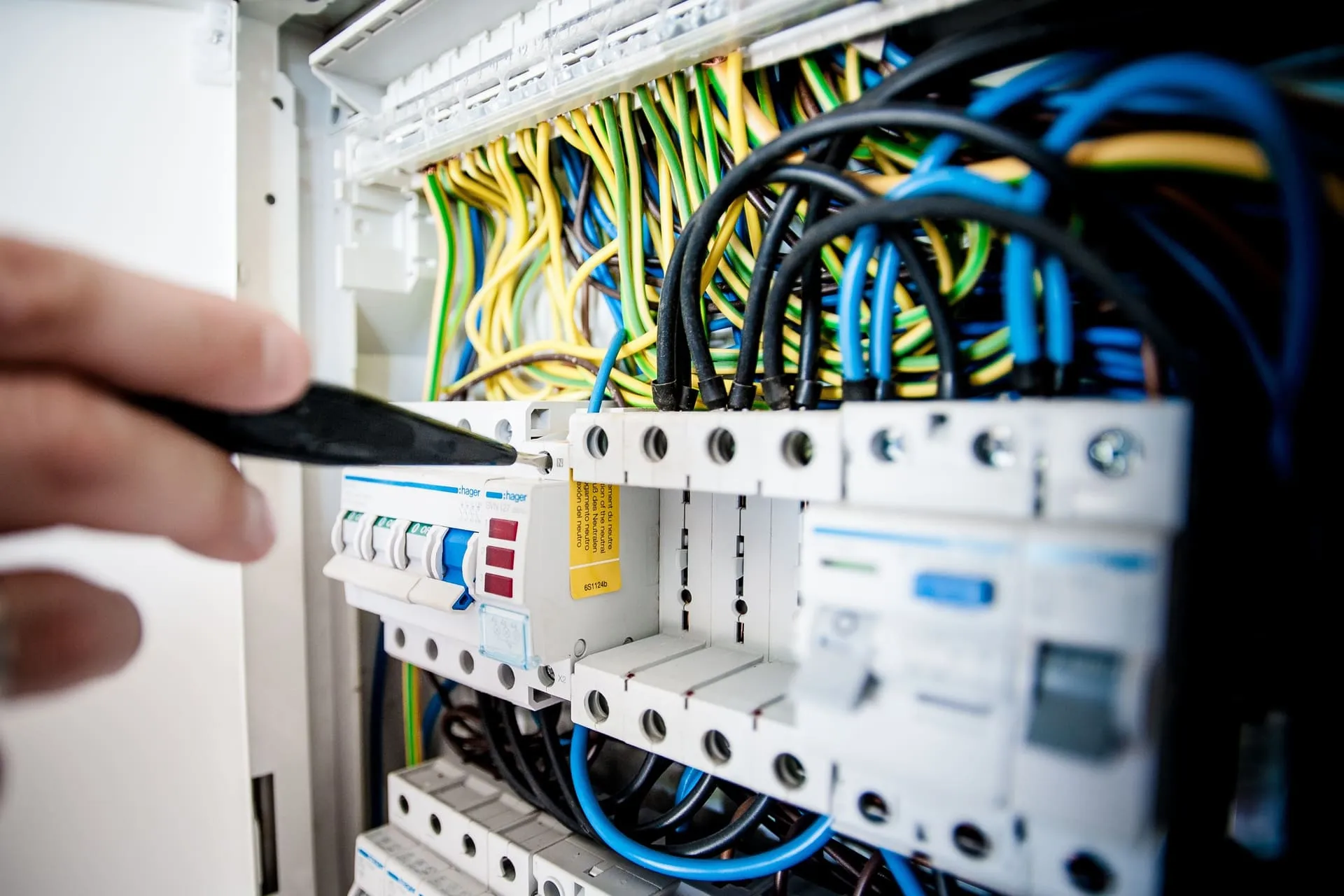
Stock photo, for illustration only. Last updated .
A safety switch is the single most important electrical safety device in a home. Also called an RCD (residual current device) or RCD switch, it watches the current flowing in a circuit and cuts the power almost instantly if some of it leaks to earth, which is what happens when a person gets a shock. Many older Adelaide homes still have no safety switch at all, or only one covering the power points.
SuperFox is an enquiry service. We pass your enquiry to one local electrician, who calls you back and quotes for the work. For other electrical jobs, see our electrician Adelaide hub.
What does a safety switch do?
A safety switch compares the current going out on the active wire with the current coming back on the neutral. If they don’t match, some electricity is going somewhere it shouldn’t, possibly through a person, a wet appliance or damaged wiring. The switch trips and cuts the power, typically within a fraction of a second.
That is different from a fuse or circuit breaker, which protects the wiring from overloads and short circuits but won’t react quickly enough to prevent a serious shock. The SA Government describes safety switches as a back-up: they reduce the risk, but don’t prevent every shock, so faulty appliances and damaged cords still need attention.
Signs your home needs safety switches
Check your switchboard. If you see any of the following, ask an electrician about RCD safety switch installation:
- Ceramic fuses with fuse wire rather than circuit breakers
- No device with a “Test” or “T” button
- A safety switch on the power points but none on the lighting circuits
- Outdoor power points, pools, spas or sheds with no RCD protection
- A test button that doesn’t trip the switch when pressed
- One safety switch covering the whole house, so any fault blacks out everything
What’s involved in safety switch installation
Safety switches are usually fitted at the switchboard. The electrician will typically:
- Inspect the board to see what protection exists and whether there is space for new devices.
- Test the circuits. Older wiring and appliances can leak a small amount of current. A new RCD will trip on those circuits, so faults need to be found and fixed first.
- Fit the safety switches, either one RCD protecting a group of circuits or an RCBO (combined breaker and safety switch) on each circuit.
- Test the new devices to confirm they trip correctly, then label the board.
- Issue a certificate of compliance for the work.
If the switchboard is old, full of ceramic fuses or has no room, the electrician may recommend a switchboard upgrade instead of squeezing new devices into an old enclosure.
Group RCDs or one per circuit?
Protecting each circuit with its own RCBO means a fault only cuts power to that circuit. Sharing one RCD across several circuits costs less up front, but a single faulty kettle can switch off the fridge, the lights and the home office. The electrician can explain the options for your board.
Safety switches in Adelaide homes
Adelaide has many homes built before safety switches were common, from post-war cottages to 1970s brick veneer houses. Some have had a single RCD added on the power circuits during a past renovation, leaving lighting circuits unprotected.
Local conditions also play a part. Winter rain can get into outdoor power points and garden lighting, and older homes with reactive clay soil movement sometimes have damaged underground cables to sheds or pumps, both common reasons for nuisance tripping. If your safety switch already trips regularly, read why your safety switch keeps tripping before booking.
What affects the price of safety switch installation?
The electrician quotes after inspecting the board. Factors include:
| Factor | Effect on the job |
|---|---|
| Number of circuits to protect | More circuits, more devices |
| RCDs vs RCBOs | Per-circuit RCBOs cost more but isolate faults |
| Space on the switchboard | A full board may need a new enclosure |
| Condition of the wiring | Leaking circuits must be repaired first |
| Fuses vs breakers | Fuse boards usually need more work |
| Outbuildings, pools and sheds | Extra circuits and cable runs |
SA rules and what to ask the electrician
According to the SA Government, safety switches for power points and lighting circuits must be installed in new homes and buildings, and where electrical circuits are added or altered. Existing homes are not generally required to retrofit them, but adding them is a sensible upgrade, and they are commonly fitted as part of a switchboard upgrade.
Electrical work in South Australia must be done by a licensed electrical worker. Licences are issued by Consumer and Business Services (CBS), and you can check one on the CBS public register. The electrician must issue a certificate of compliance for the work, which you should receive within 30 days. Our article on the certificate of compliance in SA explains more.
Ask the electrician:
- Which circuits will be protected after the work?
- Will you use RCBOs on each circuit or shared RCDs?
- What happens if a circuit fails testing?
- Do my outdoor power points, shed or pool equipment need separate protection?
- When will I get the certificate of compliance?
While the electrician is there, it is worth asking about smoke alarms too, as both are basic life-safety items.
Testing your safety switch at home
This is one of the few electrical checks a homeowner can safely do. Press the test button on each safety switch. It should trip immediately and cut power to the circuits it protects. Switch it back on. If it doesn’t trip, or won’t reset, leave it and contact an electrician. Never bypass or tape a safety switch to stop it tripping.
Getting safety switches sorted
Send one enquiry through the contact form or call 08 6800 6079. We pass your details to one local electrician, who calls you back within 24–48 hours to inspect and quote.