Quick answer
The best way to unblock a drain depends on where the blockage sits. For a single slow sink or shower, clear the strainer, remove hair or food scraps, then try a plunger. If several fixtures are slow, water gurgles or the outside gully overflows, the blockage is further down the line and a licensed plumber should clear it.
The best way to unblock a drain starts with working out where the blockage actually is. A slow bathroom basin with a clump of hair a few centimetres down is a five-minute fix. A sewer line full of tree roots under the backyard is not, and no amount of plunging will clear it.
This guide walks through the safe steps you can take for a blocked kitchen sink or a clogged shower drain, how to tell when the problem is deeper, and when a licensed plumber needs to take over. In Adelaide, older clay sewer pipes, reactive soils and established street trees make deeper blockages more common than many people expect.
Where is the blockage?
The single most useful clue is how many fixtures are affected. SA Water lists slow drainage, gurgling noises and water coming up from outdoor drains as common signs of a blockage. If these show up in several places at once, it may point to a more serious blockage.
| What you notice | Likely location | What to do |
|---|---|---|
| One sink or basin draining slowly | Waste trap or pipe just below the fixture | Clear the strainer, then try a plunger |
| Shower drain clogged, bath fine | Hair and soap at the shower waste | Remove the grate and clear hair |
| Kitchen sink slow, dishwasher backs up | Grease and food in the kitchen waste line | Plunger, then call a plumber if it persists |
| Toilet, shower and basin all slow | Main drain or sewer line | Call a licensed plumber |
| Gurgling from the toilet when other fixtures drain | Partial blockage or venting problem in the main line | Call a licensed plumber |
| Outside gully overflowing | Blockage between the house and the sewer connection | Call a licensed plumber; avoid using water |
How do I unblock a drain safely myself?
For a single slow fixture, these steps are safe for most households.
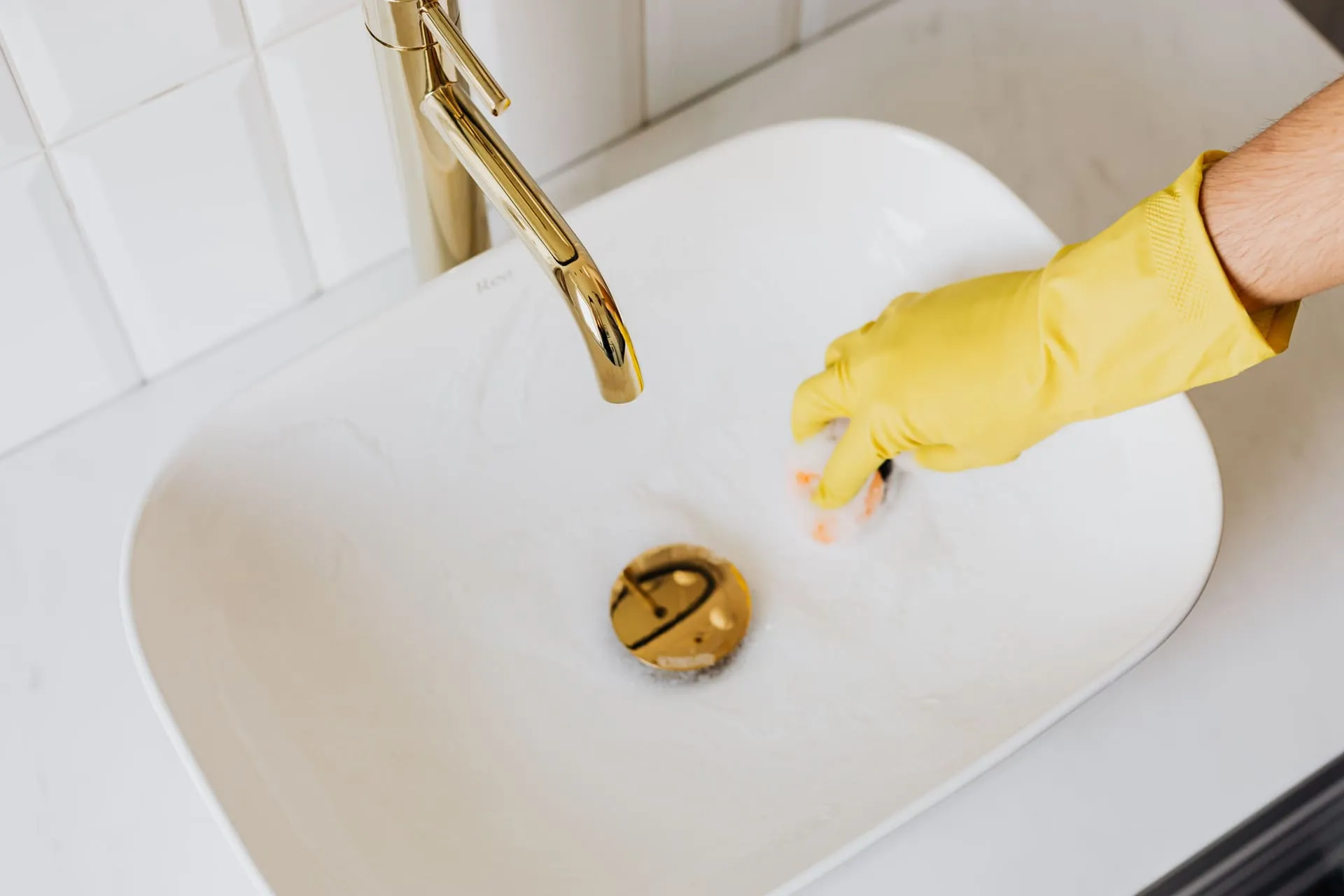
- Remove the sink strainer, plug or shower grate and pull out any hair, food or soap build-up.
- Run hot (not boiling) tap water for a minute to see if flow improves.
- Use a cup plunger on sinks and basins. Block the overflow hole with a damp cloth so the plunger can build pressure.
- Plunge firmly a dozen or so times, then check the flow.
- Clean the grate and strainer before refitting.
Stop if water starts rising in another fixture, if you notice a sewage smell, or if the outside gully is overflowing. These signs mean the blockage is further down the line, and more water will only make it worse. SA Water also recommends not using appliances such as washing machines while you have drainage problems.
What’s the best way to clear a blocked kitchen sink?
Kitchen sinks block mostly because of fats, oils and grease. They go down as liquid, cool in the pipe and set, catching food scraps and coffee grounds as they go.
Start with the strainer and a plunger. If you have a double sink, block the second outlet while you plunge the first. If the sink is still slow after a few attempts, call a plumber rather than reaching for chemicals.
To stop it coming back:
- wipe greasy pans with paper towel before washing
- put oil and fat in the bin once it cools
- use a sink strainer and empty it into the bin
- keep coffee grounds and rice out of the sink
Why does my shower drain keep clogging?
Hair is the main culprit, helped along by soap scum. In parts of Adelaide with harder water, mineral scale gives the build-up something to cling to.
Lift the grate (some screw out, some pop out) and remove what you can reach. A plastic drain-cleaning strip is cheap and does a good job. A hair catcher over the waste is the easiest way to stop the problem returning.
If the shower is still slow after the grate and the first part of the pipe are clean, there may be a deeper partial blockage or a problem with the pipe’s fall. That’s one for a plumber.
Should I use drain cleaner, caustic soda or bicarb?
Commercial caustic drain cleaners are best avoided. They are hazardous if they splash, can damage older pipes and fittings, and rarely clear solid blockages such as tree roots, wipes or built-up scale. They also create a risk for the plumber if the pipe still needs to be opened.
Home remedies like bicarb and vinegar are harmless, but they usually only help with light build-up and smells. They won’t shift a real blockage.
How do plumbers unblock drains?
Plumbers use equipment that reaches far further than any household tool and clears the cause, not just the symptom.
- Drain camera. A small camera on a flexible cable shows exactly what’s in the pipe and where, including roots, collapsed sections or misaligned joints.
- Electric eel or drain machine. A rotating cable with cutting heads breaks up blockages and roots.
- High-pressure water jetter. Water at high pressure scours grease, scale and debris off the pipe walls and flushes it through.
- Pipe repair or relining. If the pipe is cracked or broken, the plumber can explain repair options once the line is clear.
Who is responsible for a blocked sewer in Adelaide?
According to SA Water, where the blockage is determines who needs to fix it. If the blockage is within your pipes, SA Water suggests you contact a licensed plumber. If it’s in the public sewer system, SA Water is responsible and you or your plumber can report it through SA Water’s faults and outages map or by calling 1300 729 283.
A plumber can usually tell which side of the connection the blockage is on. If you rent, contact your landlord or property manager first.
Why do tree roots block drains?
Roots are drawn to the moisture and nutrients in sewer pipes. Older clay pipes, common in established Adelaide suburbs, have joints that roots can push through, and reactive clay soils can shift pipes enough to open those joints further.
If your drains block repeatedly, a camera inspection can confirm roots. Our guide to tree roots in pipes covers the long-term options, and if the tree itself is the problem, an arborist such as Tree Fox can advise.
How can I stop drains blocking again?
Most household blockages are preventable with a few habits. SA Water lists tree roots, fat, oil and grease build-ups, foreign objects and sewer line collapse as the common causes, and the first three are often within your control.
- Only flush toilet paper. Wet wipes, even ones labelled flushable, sanitary products and cotton buds belong in the bin.
- Keep fats and oils out of the kitchen sink.
- Fit hair catchers in showers and baths.
- Use strainers in the kitchen sink and laundry tub.
- Don’t plant large trees close to sewer lines, and ask a plumber to check older clay pipes if your garden has established trees.
- Keep the outside gully grate clear of leaves and soil so it can work as an overflow point.
If a drain blocks more than once or twice a year, a camera inspection is usually worth it. It shows whether there’s a root intrusion, a sagging section or a broken joint that will keep causing trouble.
When should you call a licensed plumber?
Call a licensed plumber when:
- more than one fixture is slow or blocked
- the toilet gurgles or rises when other fixtures drain
- the outside gully is overflowing
- there’s a sewage smell inside or outside
- plunging hasn’t worked after a few attempts
- the drain blocks again within weeks
Sewage overflows are a health risk. If sewage is coming into the house, stop using water and call for help straight away. Our blocked drains page explains what a plumber will do, and the Adelaide plumber hub covers other plumbing problems. For an urgent sewage overflow, see our emergency plumber page.
Getting it sorted
If the simple steps haven’t worked, send one enquiry through our contact form or call 08 6800 6079. We pass it to one local plumber, who calls you back within 24–48 hours to discuss the blockage and quote before any work starts. If water or sewage is backing up, choose Urgent on the form; we can’t promise an arrival time.
Stock photo, for illustration only. This guide is general information for Adelaide homeowners, not professional advice. In South Australia, electrical, plumbing and gas work must be carried out by an appropriately licensed tradesperson, and rules change, so check current requirements with the relevant authority.