Quick answer
Safety switch tripping means the switch has detected electricity leaking to earth, usually from a faulty appliance, moisture in an outdoor fitting or damaged wiring. Reset it once. If it trips again, unplug appliances on that circuit one at a time to find the culprit. If it still won't hold, call a licensed electrician.
A safety switch tripping is your switchboard doing its job. The switch (also called an RCD, or residual current device) watches the current going out on a circuit and coming back. When some of it goes missing, usually leaking to earth through a faulty appliance, a damp fitting or damaged wiring, it cuts the power in a fraction of a second. That speed is what protects people from serious electric shock.
So when your safety switch keeps tripping, don’t treat it as a nuisance to work around. It is telling you something on that circuit isn’t right. This guide covers the common causes, the few safe checks a homeowner can do, and when a licensed electrician needs to take over.
What does it mean when a safety switch trips?
It means the switch has detected an imbalance between the current flowing out on the active conductor and the current returning on the neutral. That difference has to be going somewhere, and “somewhere” can be through a person.
According to the SA Government, a safety switch that has disconnected the power could be reacting to a temporary fault, a lightning strike nearby, or nuisance tripping. Resetting it should restore the power. If it won’t reset, you may have a faulty appliance on that circuit or faulty wiring.
A safety switch is a back-up. It doesn’t prevent every electric shock, so it’s not a reason to ignore damaged cords or wet fittings.
Why does my safety switch keep tripping?
Most repeat trips come down to a handful of causes. The table below shows the usual suspects and the clues that point to each one.
| Likely cause | Clues to look for | What happens next |
|---|---|---|
| Faulty appliance | Trips when a particular appliance is switched on, such as a kettle, toaster, washing machine or heater | Unplug it and have it checked or replaced |
| Moisture in outdoor fittings | Trips during or after rain, or after the garden is watered | Electrician isolates the circuit and repairs the fitting |
| Damaged or ageing wiring | Trips at random, more often in older homes or after renovations | Electrician tests insulation and traces the fault |
| Too many appliances on one RCD | Trips when several things are running, such as in summer with fans and fridges | Electrician may split circuits across more safety switches |
| Worn-out safety switch | Trips with nothing obvious running, or fails the test button | Electrician tests and replaces the device |
| Pests or physical damage | Rodent damage in the roof, a nail or screw through a cable | Electrician finds and repairs the damaged section |
In Adelaide, outdoor fittings are a common culprit. A garden light, pool pump connection or external power point that has cooked in summer sun often has perished seals. The first decent rain of the season gets in and the power keeps tripping.
What can I safely check myself?
You can do a few simple, safe checks before calling anyone. The SA Government’s own advice is to switch off and unplug the appliance you think is faulty and try to reset the switch. If you’re not sure which one it is, unplug appliances one at a time and retest.
- Reset the safety switch once. Note whether it holds.
- If it trips again, switch off and unplug everything on that circuit.
- Reset the switch with everything unplugged.
- Plug appliances back in one at a time, waiting a moment between each.
- If the switch trips when one appliance goes back in, leave that appliance unplugged and have it checked.
- If it trips with everything unplugged, stop. The fault is likely in the fixed wiring or a fitting.
That’s where your part ends. Don’t open power points, light fittings or the switchboard, and don’t try to bypass or swap the safety switch. In South Australia, electrical work must be done by a licensed electrical worker. When an electrician installs a switchboard or power point safety switch, they must give you a certificate of compliance within 30 days.
If you have no power at all and your neighbours are also out, the problem is likely on the network, not in your home. Check with SA Power Networks on 13 13 66. If you see a fallen powerline, stay at least 8 metres away and call 000.
Safety switch or circuit breaker: what’s the difference?
They look similar on the switchboard but protect against different things. A safety switch protects people by detecting current leaking to earth. A circuit breaker protects the wiring by cutting power when a circuit is overloaded or short-circuited.
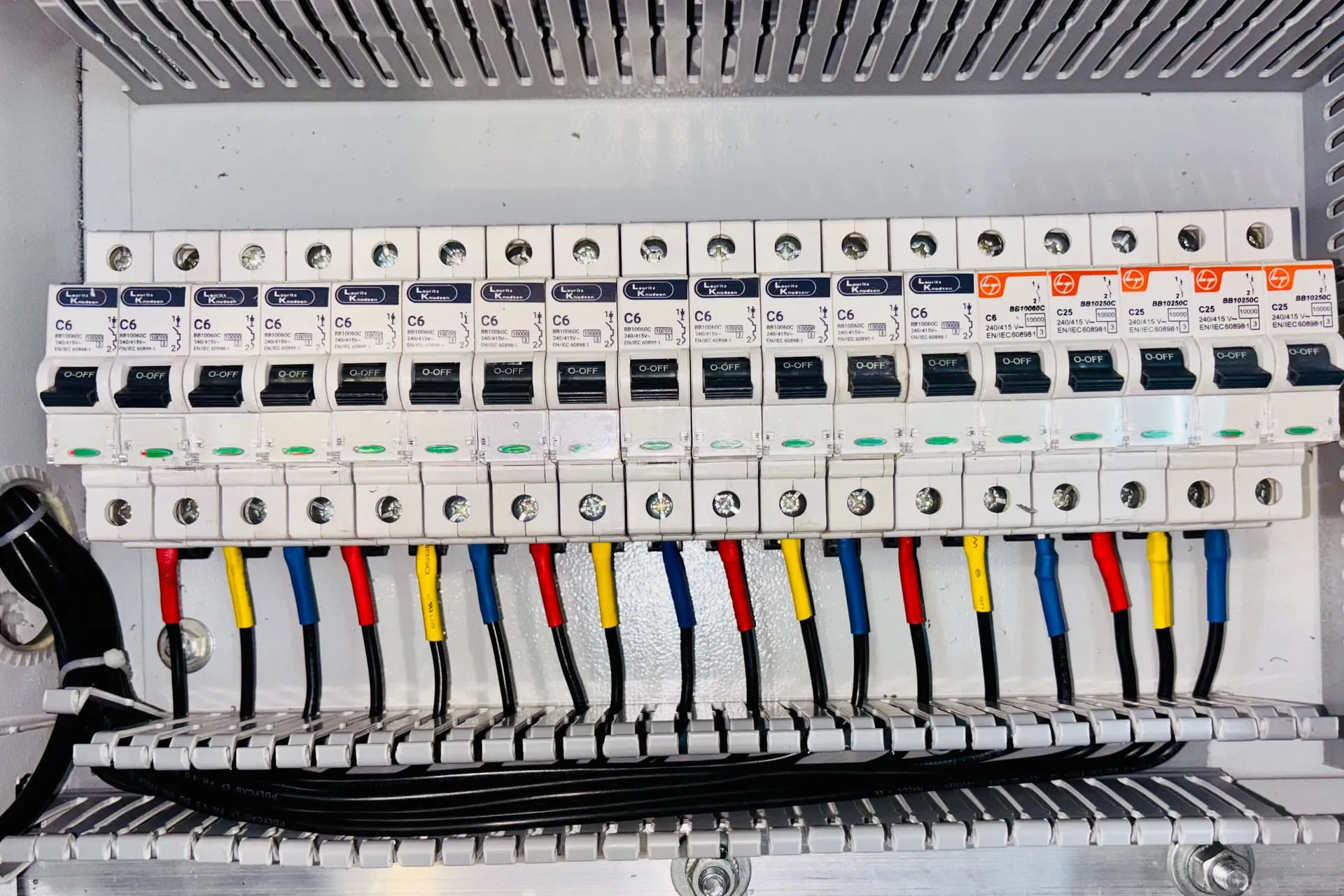
Many modern boards use combined devices (RCBOs) that do both on each circuit. If you’re not sure which device tripped, look for a “T” or “Test” button. Safety switches have one. Plain circuit breakers don’t.
Knowing which one tripped helps the electrician. A circuit breaker tripping when you run the oven and heater together suggests overload. A safety switch tripping when it rains suggests moisture.
Why does the power keep tripping when it rains?
Rain-related tripping nearly always points to water reaching live parts somewhere outside or in the roof. Common entry points include:
- outdoor power points with cracked covers or missing seals
- garden and pathway lights, especially older low-cost fittings
- external sensor lights and downlights under eaves
- underground cables to sheds, pumps or garages that have been nicked by a spade
- roof leaks dripping onto a junction box or light fitting
If you suspect a roof leak is involved, have the roof looked at too. A roofing specialist such as Ridge Fox can find where the water is getting in, while the electrician deals with the wiring.
When should you call a licensed electrician?
Call an electrician if the safety switch won’t reset with everything unplugged, keeps tripping without a clear pattern, or fails the test button. Treat these as urgent:
- burning smells, scorch marks or buzzing at the switchboard or a power point
- a power point or switch that feels warm
- tripping combined with tingles or mild shocks from taps, appliances or metal fittings
- the switch won’t trip when you press the test button
For anything that feels unsafe, leave the circuit off. You can find out more about after-hours help on our emergency electrician page.
An electrician will usually test the insulation resistance of each circuit, check the safety switch’s trip time, and work through fittings until the fault shows up. Intermittent faults can take time to trace, which is worth knowing when you’re reading the quote.
Should you upgrade old safety switches or the switchboard?
Sometimes the right fix is more than a single repair. Many older Adelaide homes still have ceramic fuses and no safety switches at all, or only one safety switch covering every circuit. When one RCD protects the whole house, a single fault anywhere blacks out everything.
The SA Government notes that by law, safety switches for power points and lighting circuits must be installed in new homes and buildings where circuits are added or altered. If you’re renovating, that requirement may apply to your job anyway.
A licensed electrician can tell you whether adding more safety switches makes sense, or whether a full switchboard upgrade is the better path. You’ll find more about older homes and fault finding on the Adelaide electrician hub, and our guide to the certificate of compliance in SA explains the paperwork you should get afterwards.
How do I test my safety switch?
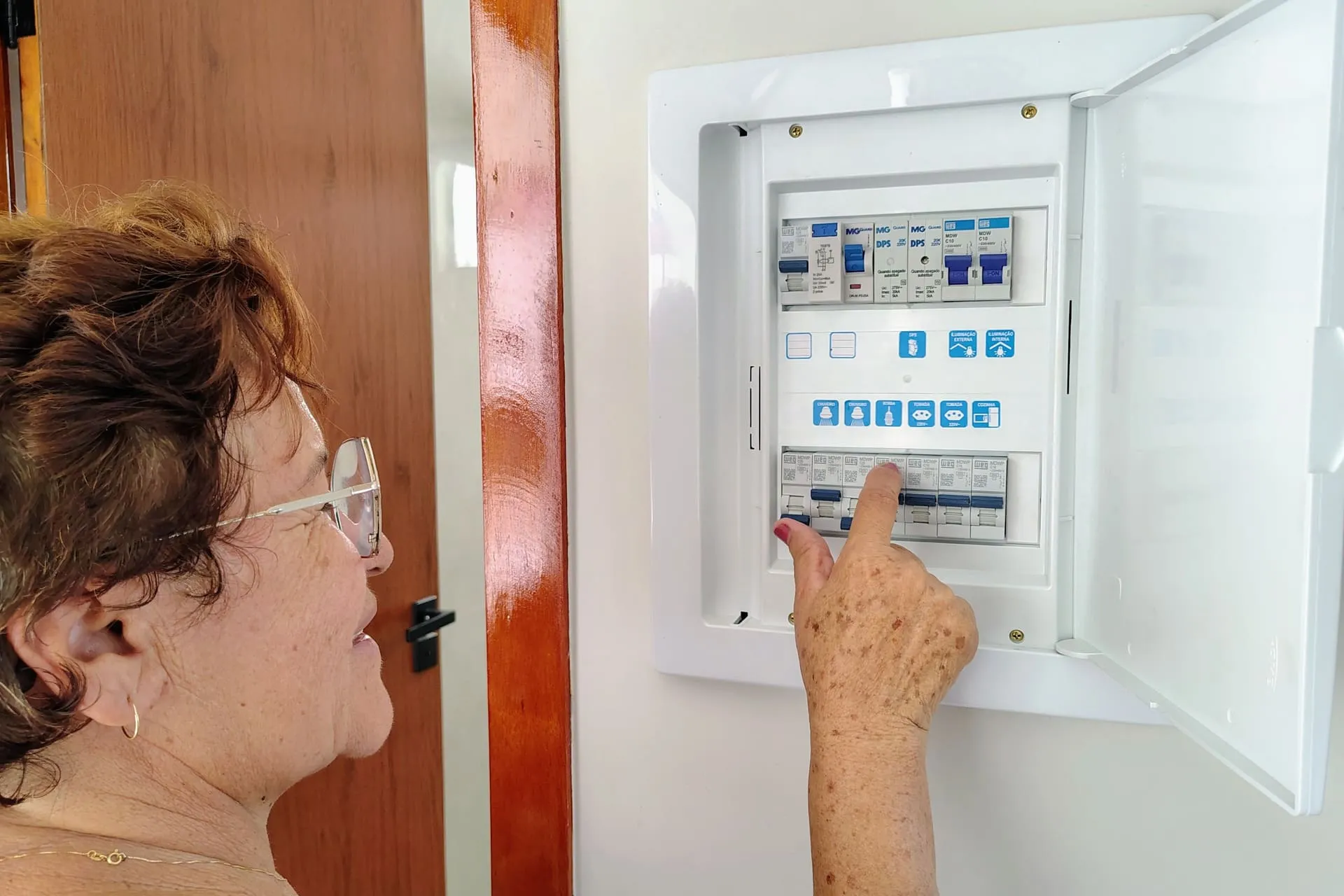
Testing is quick and safe. The SA Government recommends testing safety switches twice a year, and suggests doing it when the clocks change for daylight saving.
- Warn the household and switch off computers or anything that shouldn’t lose power suddenly.
- Press the “T” or “Test” button on each safety switch.
- The switch should trip to “off” straight away.
- Switch it back on and reset any clocks.
If pressing the test button does nothing, turn off the power and call a licensed electrician. A safety switch that won’t trip on test can’t be relied on in a real fault.
Getting it sorted
If your safety switch keeps tripping and the simple checks haven’t found the cause, send us one enquiry through the contact form or call 08 6800 6079. We pass it to one local electrician, who calls you back within 24–48 hours to talk through the problem and quote before any work starts. If the job is urgent, choose Urgent on the form; we can’t promise an arrival time.
Stock photo, for illustration only. This guide is general information for Adelaide homeowners, not professional advice. In South Australia, electrical, plumbing and gas work must be carried out by an appropriately licensed tradesperson, and rules change, so check current requirements with the relevant authority.