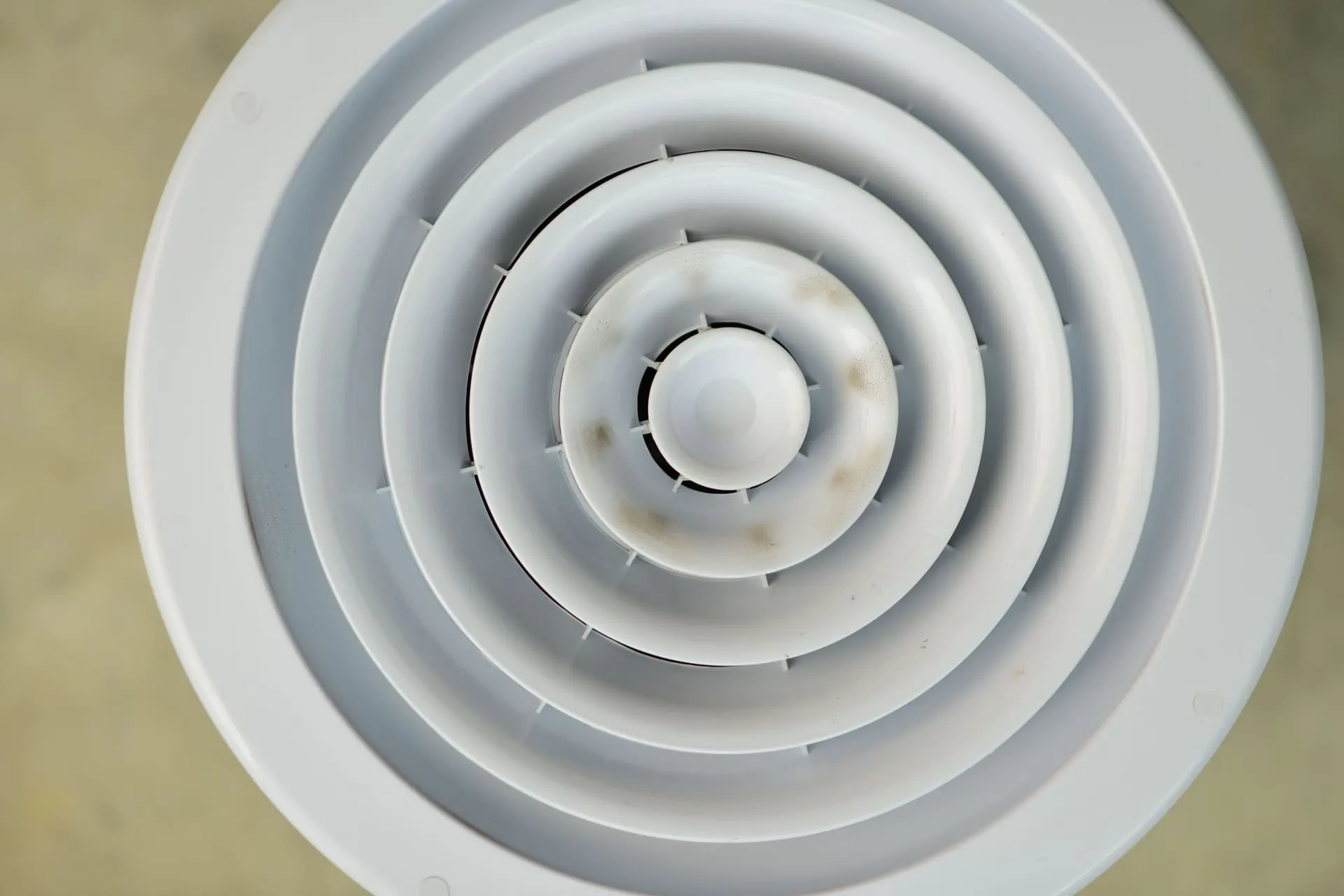
Stock photo, for illustration only. Last updated .
Ducted air conditioning gives you heating and cooling throughout the home from a single system, with only discreet ceiling vents and a wall controller on show. Most systems installed in Adelaide are ducted reverse cycle air conditioning, which both cools and heats. It’s a bigger investment than a split system, so design and installation quality matter a great deal.
SuperFox is an enquiry service. We pass your enquiry to one local air-conditioning technician, who calls you back, assesses the home and quotes. For more on air-con in Adelaide, see our air conditioning Adelaide hub.
How ducted air conditioning works
A ducted system has an indoor fan coil unit, usually in the roof space, and an outdoor unit with the compressor. Conditioned air is pushed through insulated ducts to vents in each room, and air returns through a central return air grille, which holds the filter.
Key parts:
- Indoor unit in the roof space (or sometimes under the floor)
- Outdoor unit on the ground or a wall bracket
- Ductwork to each room and a return air grille
- Zone dampers to direct air to the areas in use
- Controller, often with an app and zone-by-zone control
Is ducted aircon right for your home?
| Ducted suits you if… | A split system may suit better if… |
|---|---|
| You want the whole house heated and cooled | You only need a handful of rooms |
| You prefer vents to wall units | You don’t have usable roof space |
| You’re building or renovating | You want to stage costs room by room |
| The home has good roof access | The roof is very low or flat |
Our guide to ducted vs split system goes through the trade-offs in detail. If a few rooms are enough, see split system air conditioner installation.
What’s involved in ducted air conditioning installation
- Design and sizing. The technician assesses the floor area, ceiling heights, insulation, glazing and orientation, and designs a duct layout and zones. Our guide on what size air conditioner you need explains the main sizing factors.
- Position the units. The indoor unit needs secure support in the roof and service access; the outdoor unit needs airflow and a stable base.
- Install ducts and vents, cutting ceiling openings and running insulated ducting through the roof.
- Connect refrigerant pipework, then pressure test and evacuate the lines.
- Electrical work: usually a dedicated circuit from the switchboard, done by a licensed electrician.
- Fit zone dampers and the controller.
- Commission and balance the system so each room gets the right airflow.
A typical install takes a few days, depending on the home.
Ducted air conditioning in Adelaide homes
Adelaide’s hot summers and cool winters suit ducted reverse cycle systems well. Many Adelaide homes are single-storey with pitched roofs, which usually gives workable roof space. Roof spaces get extremely hot in summer, so duct insulation and the indoor unit’s position affect how efficiently the system runs. Installers often prefer early starts for roof work on hot days.
Older homes may have little room between ceiling and roof, and two-storey homes need careful routing of ducts to the upper level. In the Adelaide Hills, heating performance on cold mornings is a bigger consideration. Some older homes still have ducted evaporative coolers; switching to ducted reverse cycle usually means new ductwork and a larger electrical load, so check whether your switchboard needs a switchboard upgrade.
What affects the price of ducted air conditioning?
We don’t publish prices; the technician quotes after assessing the home. The main factors:
- Home size and the system capacity needed
- Number of zones and outlets
- Roof space and access, single or two-storey
- New ducts or reusing existing ducting
- Brand and controller (zoning, app control, individual room sensors)
- Electrical work, including switchboard capacity and single- or three-phase supply
- Removal of an old system, including refrigerant recovery
Licences and what to ask the installer
Ducted air conditioning installation involves refrigerant, so the technician must hold an appropriate refrigerant handling licence from the Australian Refrigeration Council (ARC), known as ARCtick. You can check a licence at lookforthetick.com.au. The electrical connection must be done by a licensed electrician; electrical licences in SA are administered by Consumer and Business Services (CBS).
Ask the installer:
- What ARC licence do you hold, and who does the electrical work?
- How did you size the system, and how many zones do you recommend?
- Where will the indoor and outdoor units go?
- Will existing ducts be reused or replaced?
- Will I receive a certificate of compliance for the electrical work?
- What servicing does the manufacturer’s warranty require?
Once installed, regular air conditioning servicing keeps filters, coils and ducts in good order.
Getting the most from a ducted system
A few habits make a ducted system cheaper to run. Close zones you aren’t using, keep doors closed to conditioned rooms, and set a moderate temperature rather than the lowest or highest the controller allows. Clean the return air filter regularly, as a clogged filter cuts airflow throughout the house. On very hot days, starting the system earlier in the afternoon, before the house heats up, is usually more efficient than running it hard in the evening.
Getting ducted air conditioning sorted
Send one enquiry through the contact form or call 08 6800 6079. Tell us the size of the home, number of storeys and whether you have an existing system. We pass the details to one local air-conditioning technician, who calls you back within 24–48 hours to arrange an assessment and quote.