Quick answer
If you smell gas in your house, get everyone outside straight away, opening doors and windows as you go. Don't use light switches, appliances, phones or flames inside. Outside, turn off the gas at the meter if it's safe, then call a licensed gas fitter or Australian Gas Networks on 1800 427 532. If gas has caught fire, call 000.
If you smell gas in your house, stop reading and act now. Get everyone outside, opening doors and windows as you go. Don’t touch light switches, appliances or power points, and don’t use a flame or a phone inside. Once outside, call Australian Gas Networks on 1800 427 532 or a licensed gas fitter. If gas has caught fire or anyone is in danger, move to a safe place and call 000.
The rest of this guide explains the signs of a gas leak, what to do step by step, who is responsible for which part of the gas supply, and what happens when a licensed gas fitter arrives. It is safety information only. Never try to find or repair a gas leak yourself.
What should I do if I smell gas inside?
Leave first, then make calls from outside. The SA Government’s advice for a suspected leak inside your home is to go outside at once, opening doors and windows and putting out any open flames as you go.
To reduce the risk of a spark or fire, the SA Government also says:
- don’t use a flame to find the leak
- don’t use a fan to help ventilate
- don’t plug in, unplug, or switch any electrical appliance on or off
- don’t use a telephone indoors
- don’t use a torch or switch any lights on or off
- don’t smoke or light matches in or near the property
Once everyone is outside:
- Turn off the gas at the meter if you can reach it safely.
- Call for help using a mobile phone away from the house, or ask a neighbour to call.
- Wait outside until a gas fitter has inspected the home.
If gas has caught fire, move to a safe place and call 000, and ask for fire.
What are the signs of a gas leak?
The smell is the biggest giveaway. Natural gas has a strong smell added to it so leaks can be detected easily. Many people describe it as rotten eggs or sulphur.
Leaks don’t always give off a constant, strong smell, though. Watch for these other signs.
| Sign | Where you’d notice it |
|---|---|
| Gas smell, faint or strong | Near the meter, appliances, pipes or inside the house |
| Hissing or whistling sound | Near pipework, a gas appliance or the meter |
| Bubbles on the surface of puddles | Over underground pipes after rain or watering |
| Patches of dead grass or plants | Along the line of an underground pipe |
| Gas bill higher than usual | When usage hasn’t changed |
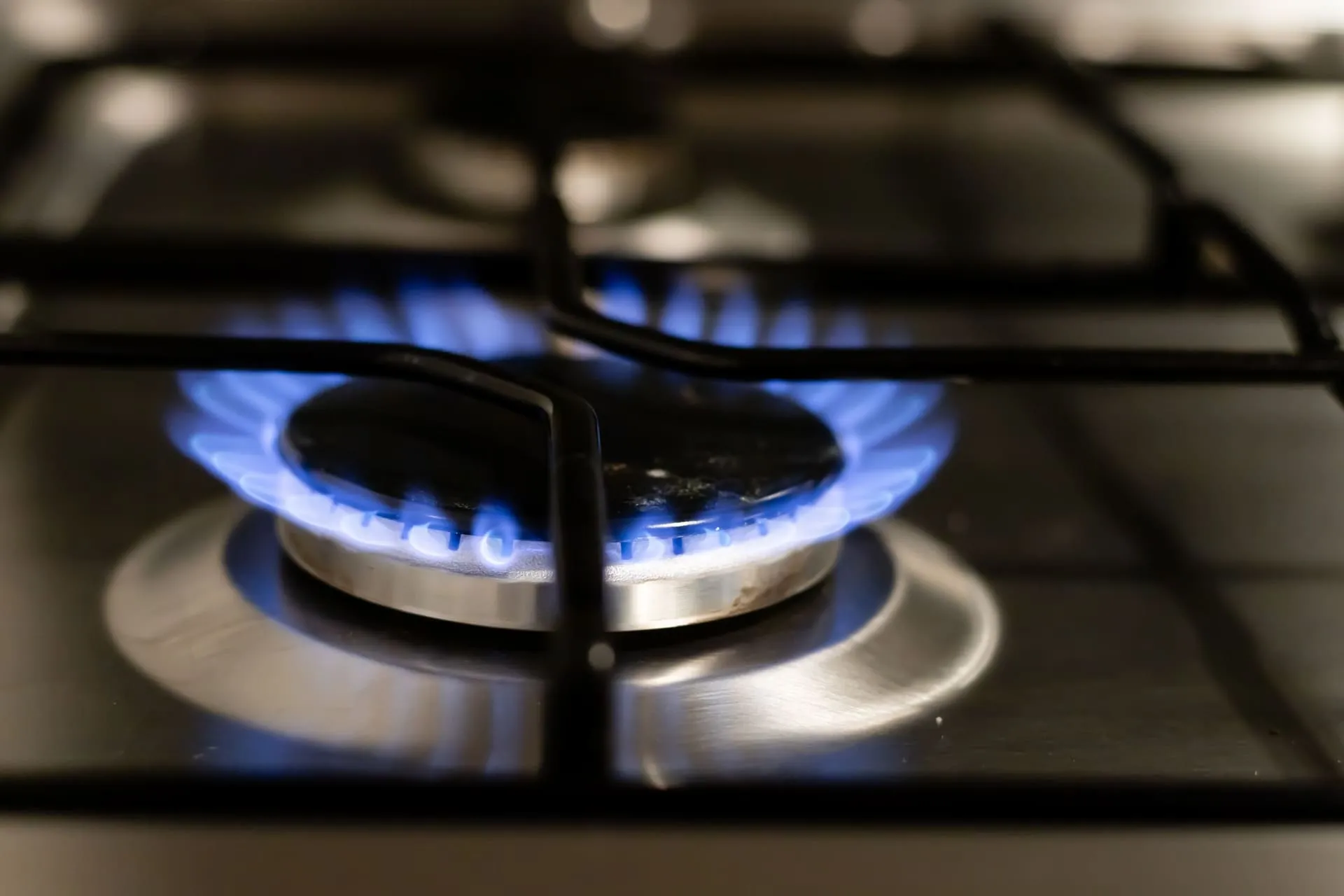
| Yellow or lazy flames on a gas cooktop or heater | May indicate a faulty appliance that needs servicing |
| Headaches, dizziness or nausea indoors | Could signal carbon monoxide from a faulty appliance; get fresh air and seek medical help |
The SA Government specifically lists bubbles on puddles and patches of dead grass or vegetation as signs of a leak in underground pipes.
How can I tell if I have a gas leak if I can’t smell it?
Look for the other signs above, especially a rising gas bill, hissing sounds and dead patches over pipe routes. If you suspect anything, don’t test it yourself. Don’t use soapy water around fittings, sniff around appliances, or light anything to check. Call a licensed gas fitter and describe what you’ve noticed.
Carbon monoxide is a separate risk. It comes from gas appliances that are faulty, poorly ventilated or not burning properly, and it has no smell. Regular servicing of gas heaters and appliances by a licensed gas fitter is the best protection.
Who is responsible for a gas leak?
It depends where the leak is. The SA Government sets out the split clearly.
Australian Gas Networks is responsible for repairing leaks in gas infrastructure, including:
- the street mains
- the pipework between the mains and your gas meter
- your gas meter
Report these leaks immediately on 1800 427 532.
You, the property owner, are responsible for everything after the gas meter. By law, you must use a licensed gas fitter for any work between the meter outlet and the pipework to your appliances, the appliances themselves, and any flues or ducts. If you smell gas on your property, the SA Government’s advice is to turn off the gas supply at the meter and call a licensed gas fitter.
If you rent, tell your landlord or property manager as soon as you’re safe, after making the emergency call.
What does a gas smell outside mean?
A gas smell in the street, on the verge or nature strip usually points to the network, not your property. Report it to Australian Gas Networks on 1800 427 532. Keep people and pets away and don’t start cars or use anything that could spark nearby.
If the smell is strongest around your meter or along the pipe to your house, turn off the gas at the meter if it’s safe and call a licensed gas fitter. If you’re not sure where it’s coming from, call Australian Gas Networks.
What happens when the gas fitter arrives?
A licensed gas fitter will isolate the gas, find the source of the leak, repair it and test the installation before turning the gas back on. That may include a pressure test of the pipework and checks on each appliance.
Once the work is done, the gas fitter must give you an electronic certificate of compliance, which the SA Government says should arrive within 30 days for gas work. Our gas fitting page explains more about the kinds of gas work a licensed fitter handles, and our guide to the certificate of compliance in SA explains what the paperwork confirms.
What about LPG bottles and Hills properties?
Many homes in the Adelaide Hills and on rural blocks use bottled LPG instead of mains natural gas. The same safety rules apply if you smell gas: get everyone outside, avoid switches, flames and phones indoors, and don’t go back in until it’s been checked.
If you can safely reach the cylinders, close the valve on top of the bottles. Then contact your LPG supplier and a licensed gas fitter. If there’s fire or anyone is in danger, call 000.
LPG is heavier than air, so leaked gas can collect in low spots such as under floors, in pits or along the ground. Keep people away from those areas and don’t start cars or machinery nearby until the area is cleared.
Pipework and appliances after the cylinders are your responsibility, and any work on them must be done by a licensed gas fitter.
How can I reduce the risk of gas leaks?
Prevention comes down to good installation and regular servicing.
- Have gas heaters and other appliances serviced by a licensed gas fitter as the manufacturer recommends.
- Only use licensed gas fitters for new appliances, relocations and pipework.
- Don’t block vents or flues on gas heaters and hot water units.
- Know where your gas meter is and how the shut-off valve works, so you can find it quickly.
- Check where underground services run before digging in the garden, and avoid excavating near gas pipes.
If you’re replacing a gas hot water system, our guide to heat pump vs gas hot water compares the options.
When should you call a licensed gas fitter?
Call immediately for any gas smell, hissing, or damaged pipe or meter, after getting everyone to safety. Call soon for:
- appliance flames that burn yellow or orange instead of blue
- soot or scorch marks around a gas heater or appliance
- a pilot light that keeps going out
- a gas appliance that hasn’t been serviced in years
All gas work in South Australia must be done by a licensed gas fitter. For urgent plumbing and gas help, see our emergency plumber page or visit the Adelaide plumber hub.
Getting it sorted
For an active gas leak, call 1800 427 532 or 000 first, not us. Once you’re safe and need a licensed gas fitter to repair, test or service your gas system, send one enquiry through our contact form or call 08 6800 6079. We pass it to one local gas fitter, who calls back within 24–48 hours to quote. Choose Urgent on the form if you need it; we can’t promise an arrival time.
Stock photo, for illustration only. This guide is general information for Adelaide homeowners, not professional advice. In South Australia, electrical, plumbing and gas work must be carried out by an appropriately licensed tradesperson, and rules change, so check current requirements with the relevant authority.