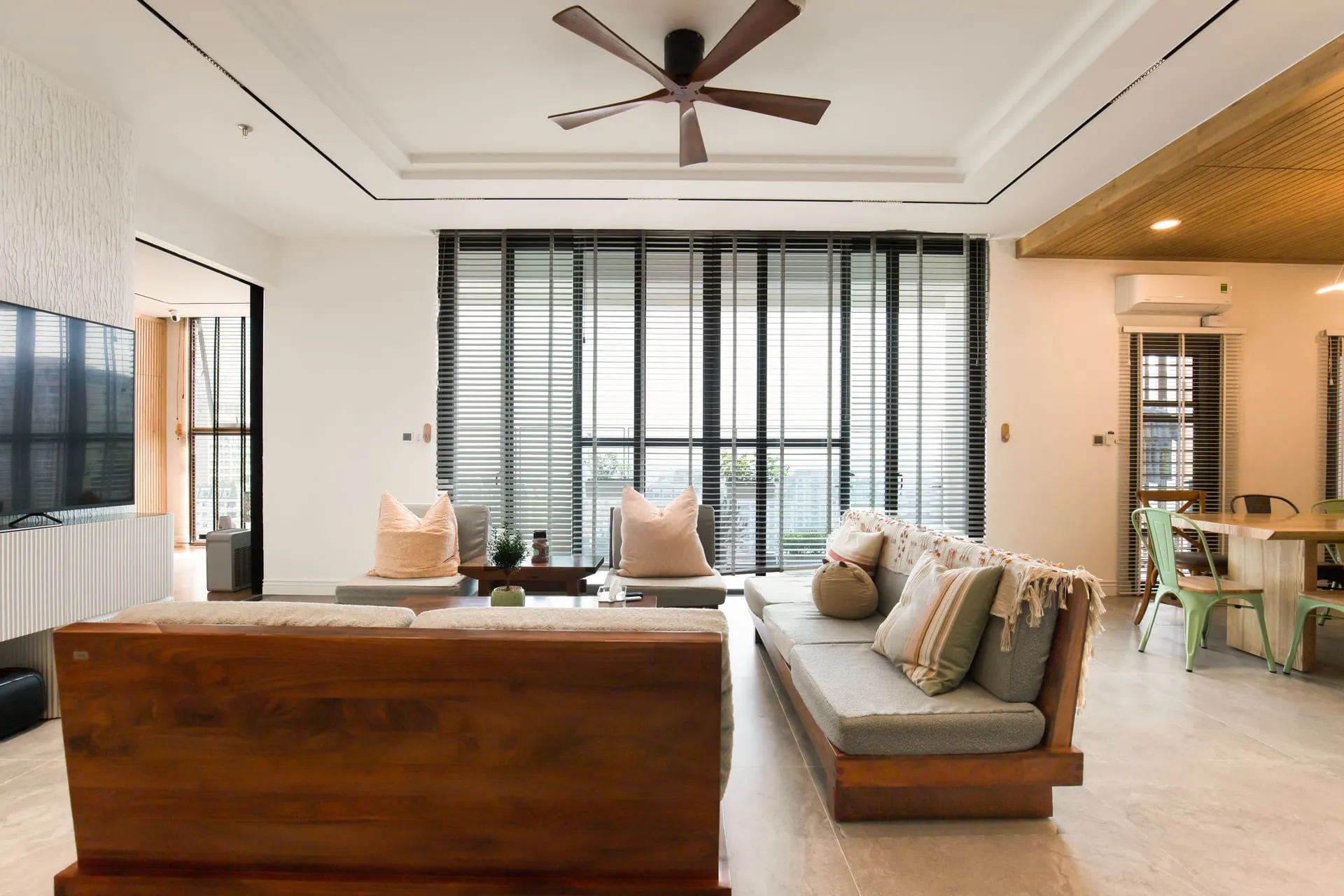
Stock photo, for illustration only. Last updated .
Ceiling fan installation is a popular job in Adelaide, and for good reason. A ceiling fan moves air for very little power, makes bedrooms more comfortable on warm nights, and takes pressure off the air-conditioner during long summers. Many fans also run in reverse in winter to push warm air down from the ceiling.
SuperFox is an enquiry service. We pass your enquiry to one local electrician, who calls you back and quotes. For other electrical work, see our electrician Adelaide hub.
What ceiling fan jobs are covered?
- New ceiling fan installation where there is no existing fan
- Replacing an old fan with a newer, quieter model
- Swapping a light for a fan, or a fan with a built-in light
- Repair ceiling fan jobs: wobbling, humming, slow speeds, dead controllers or faulty remotes
- Wall controllers and remotes, including smart and app-controlled fans
- Outdoor fans for alfresco and patio areas
If you are searching for an electrician to install a ceiling fan, it helps to buy the fan first, or at least choose the model, so the electrician can check the mounting, controls and wiring needs before quoting.
Signs your fan needs attention
| Problem | Likely cause |
|---|---|
| Wobbling | Loose mounting, unbalanced blades or bent blade arms |
| Humming or buzzing | Worn controller, failing capacitor or incompatible dimmer |
| Fan runs slowly on every speed | Capacitor or controller fault |
| Remote doesn’t work | Receiver fault or pairing issue |
| Fan or light flickers | Loose connection, have it checked |
| Burning smell | Stop using it straight away and get it inspected |
What’s involved in ceiling fan installation
- Check the location. The electrician looks at the ceiling height, room size, nearby light fittings and the roof space above.
- Secure the mounting. Ceiling fans must be fixed to the ceiling structure, typically a joist or a purpose-made bracket, never to plasterboard alone.
- Run wiring from the lighting circuit or a suitable supply, plus cabling for a wall controller if one is used.
- Assemble and hang the fan, fit the blades and balance it.
- Test every speed, the light (if fitted), reverse mode and remote.
- Issue a certificate of compliance for the electrical work.
Installing fans at the same time as new lights is common, so if you’re updating lighting, see our page on lighting installation.
Ceiling fans in Adelaide homes
Adelaide’s dry summer heat and run of very hot days make fans useful in almost every home. Many households use fans to stay comfortable on milder days and switch the air-con on only for the hottest stretch, which can noticeably reduce running costs. Fans in bedrooms are especially popular, as they help on warm nights when the house is still holding the day’s heat.
Older homes with high ceilings in suburbs such as Unley, Norwood and Prospect may need longer extension rods. Newer homes often have plasterboard ceilings with good roof access, which makes installation simpler. Outdoor fans in coastal suburbs should be rated for outdoor and damp conditions, as salt air is hard on metal parts.
Fans work well alongside air-conditioning rather than replacing it. If your home needs cooling as well, see our page on split system air conditioner installation.
What affects the price of ceiling fan installation?
We don’t publish prices; the electrician quotes before work starts. The main factors:
- Replacing an existing fan vs a new location. New locations need new wiring and a mounting point
- Ceiling height and type: raked, high or lath-and-plaster ceilings take longer
- Roof access for running cable and fixing the bracket
- Controls: wall controller, remote or smart control
- Number of fans. Several fans in one visit is more efficient
- Supplying the fan. Some customers buy their own fan; others ask the electrician to supply one
Our guide to ceiling fan installation cost goes through these factors in more detail.
SA rules and what to ask the electrician
Ceiling fans connect to fixed wiring, so in South Australia they must be installed by a licensed electrical worker. Licences are administered by Consumer and Business Services (CBS), and you can check one on the CBS public register. The electrician should give you a certificate of compliance for the work. Also check the manufacturer’s warranty conditions, as some require installation by a licensed electrician.
Ask the electrician:
- How will the fan be fixed to the ceiling structure?
- Will the fan have a wall controller, a remote or both?
- Is the fan suitable for this room size and ceiling height?
- Can the existing light point be used, or is new wiring needed?
- Will the fan circuit be protected by a safety switch?
Choosing the right fan for the room
Fan size should suit the room. Larger rooms and open-plan living areas need a bigger blade sweep, or two fans, while small bedrooms suit compact models. Allow enough clearance between the blades and the floor, and keep fans away from light fittings that would create a flicker as the blades pass. In bedrooms, a quiet DC motor and a remote are usually worth it. For outdoor areas, choose a fan rated for outdoor use. If you’re unsure, the electrician can recommend sizes before you buy.
Getting your ceiling fan sorted
Send one enquiry through the contact form or call 08 6800 6079. Let us know how many fans, the rooms and whether you already have the fans. We pass the details to one local electrician, who calls you back within 24–48 hours to quote.