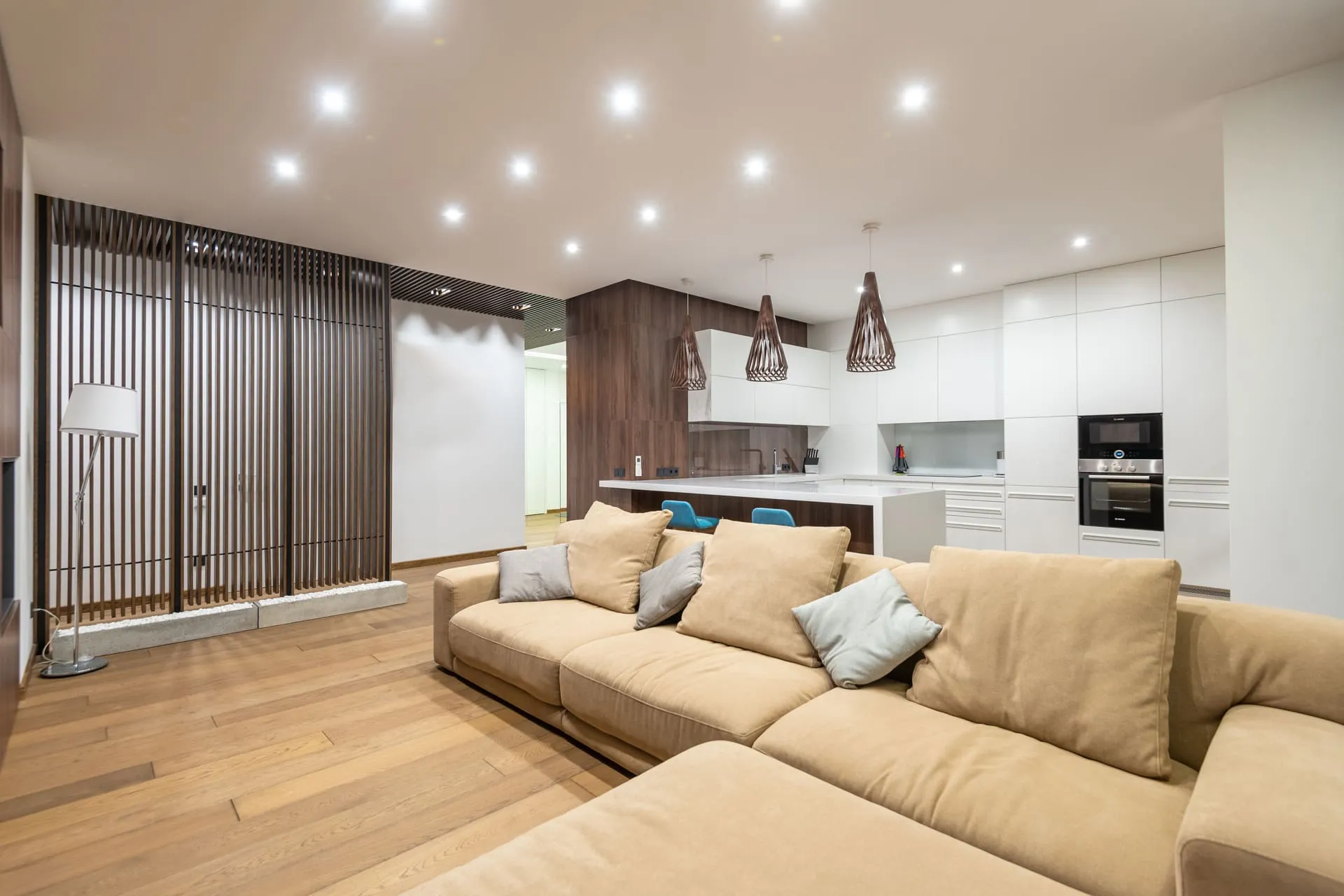
Stock photo, for illustration only. Last updated .
Downlight installation is one of the easiest ways to change how a room looks and feels. Most jobs in Adelaide fall into two groups: replacing old halogen downlights with LED downlights, and adding new lighting during a renovation, extension or kitchen update. Both are electrical work that a licensed electrician must do.
SuperFox is an enquiry service. We pass your enquiry to one local electrician, who calls you back and quotes. For other electrical jobs, see our electrician Adelaide hub.
What lighting installation jobs are covered?
- LED downlight replacement: swapping halogen downlights and their transformers for LED fittings
- New downlights: planning a layout and cutting new holes
- Pendant and feature lights over benches, dining tables and stairs
- Outdoor and garden lighting, including sensor lights and wall lights
- Dimmers and smart switches
- Exhaust fans with lights in bathrooms
- Fixing faulty lights that flicker, buzz or won’t turn on
Why switch to LED downlights?
LED downlights use a fraction of the electricity of halogen downlights to produce similar light, and they run much cooler. Halogens get hot enough that they need clearance from roof insulation and timber. Many homes in Adelaide still have dozens of halogens fitted in the 1990s and 2000s, and replacing them is often one of the simplest energy-saving jobs in the house.
| Halogen downlights | LED downlights | |
|---|---|---|
| Energy use | High | Low |
| Heat | Very hot | Warm |
| Lamp life | Short | Long |
| Transformer | Separate, can fail | Driver, often built in |
| Insulation | Needs clearance | Many are rated for contact (check the rating) |
Signs it’s time for new lighting
- Halogen globes keep blowing, or the transformers fail
- Lights flicker or buzz, especially on a dimmer
- Dark kitchen benches or shadows where you work
- Gaps in the roof insulation around old downlights
- Scorch marks around a light fitting (stop using it and get it checked)
- You’re renovating and want a new layout
What’s involved in downlight installation
- Plan the layout. The electrician looks at the room, ceiling joists and what the space is used for, then suggests spacing and how many lights you need.
- Check the roof space for access, insulation type, existing cabling and any obstructions.
- Cut holes and run cable for new lights, or remove old halogen fittings and transformers for replacements.
- Install the fittings and drivers, keeping insulation and clearances in line with the fitting’s rating.
- Connect switching and dimmers, then test everything.
- Issue a certificate of compliance for the electrical work.
If you are adding lights and want air movement too, ask about ceiling fans in the same visit, since both use the ceiling and roof space.
Lighting in Adelaide homes
Adelaide roofs get extremely hot in summer, often far hotter than the outside air. That heat shortens the life of cheap drivers and transformers and makes working in the roof slow and uncomfortable, so electricians often prefer cooler morning starts for roof work in the warmer months.
Many Adelaide homes are single-storey with pitched tiled or Colorbond roofs, which usually gives reasonable access. Flat-roofed extensions, raked ceilings and two-storey homes make cabling harder. Older homes with lath-and-plaster ceilings need more care when cutting holes.
What affects downlight installation cost?
We don’t publish prices because every home differs; the electrician quotes before work starts. What drives the downlight installation cost:
- Number of lights and how many rooms
- Replacement vs new. Using existing holes and cabling is quicker than a fresh layout
- Roof access. Tight, low or flat roofs and two-storey homes take longer
- Ceiling type. Plasterboard, raked ceilings or old lath-and-plaster
- Fitting quality: colour options, dimming, beam angle and finish
- Switching: dimmers, two-way switches and smart controls
- Extra circuits if lighting circuits are already full or unprotected
SA rules and what to ask the electrician
Electrical work in South Australia must be done by a licensed electrical worker. Licensing is administered by Consumer and Business Services (CBS), and you can check a licence on the CBS public register. The electrician should give you a certificate of compliance when the work is done; our guide to the certificate of compliance in SA explains what it covers.
Older homes may have lighting circuits with no safety switch protection. When lighting circuits are added or altered, the SA Government says they need safety switch protection, so the electrician may recommend adding safety switches as part of the job.
Ask the electrician:
- Are these downlights rated to be covered by insulation?
- Are the downlights and dimmers compatible?
- What colour temperature do you recommend for each room?
- Will the existing holes be reused, or will the ceiling need patching?
- Are my lighting circuits protected by a safety switch?
Safe checks you can do yourself
If a light won’t work, try a new globe (for globe-type fittings) and check whether a breaker or safety switch has tripped. Don’t remove fittings, touch wiring or move insulation around downlights yourself.
Getting your lighting sorted
Send one enquiry through the contact form or call 08 6800 6079. Tell us how many lights and which rooms. We pass the details to one local electrician, who calls you back within 24–48 hours to quote. While they’re there, it can be worth adding a power point or two.